Turning Honey into Money
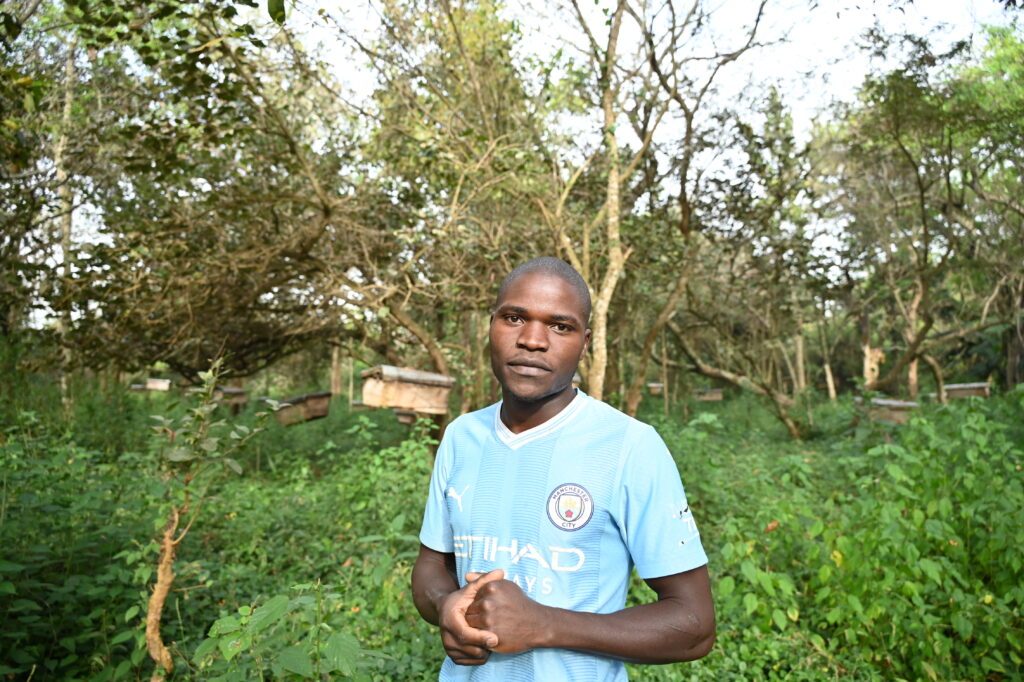
Ivan Opio, a young farmer from Abwoch Parish, Abuga subcounty shares his experience growing and thriving as a farmer, with a passion for watching others thrive too.
By Tabitha Avola, Communications, Advocacy and External Engagements Officer, World Vision Uganda
Why I chose to be an apiary farmer.
I always wanted to do apiary. When we were growing up I watched my grandparents hang at least two to three hives that would provide food in the household. We used not to fall sick as children and were very healthy. We lacked for nothing.
Apiary, I discovered is one of the simplest and less tiresome things to do. When I first set out, I started with four tugu (palm) hives that were for home consumption and we would sell the rest at 5000shs a cup in the market. It brought in extra income.
This place already had a forest with natural trees that the bees love and is good for apiary and honey production. When I decided to take the apiary route, I talked to my father and he told me that If I am to do apiary, I need to maintain it very well.
My father gave me three lucoro trees to use for my hives. I planned that If I could sell off some of the honey and also top up with money from farming, I would hire someone with a machine to cut down the trees for me. I also planned to hire a craftsman to make for me the hives.
From the three trees, I got ten hives. The challenge then was how getting the top bars for the hives. Each was at 500shs. I used the money from my farming to cover this cost and set up the hives. They were so easily colonized in a few days.
In those days, I did not know how to work with the hives, harvesting and seasons. In the beginning I had both wins and losses. More loses really. I would wait for the second and third months to harvest and at times get loses because the bees would have consumed the honey. Other times I would find the dark second class honey that did not sell well.
A friend of mine, another apiary farmer advised me to ‘disturb’ the hives a bit in the eighth month. So that by the twelfth month, the hives are full and in the first month, I start harvesting. The harvest was good, I got over 160kg of honey that year.
Turning honey into money.
I had to look for the market for the honey. I could no longer sell at the measurement of the cup, I instead got wholesalers that bought the honey at 10,000shs per kg. Finally, I started to get wins.
I decided to fully embrace it. I started raising money in that way and kept on increasing the number of hives. Today, I have 85 colonized hives, I have seven new hives yet to be colonized, and I am grateful that World Vision has also added me ten new hives.
Last year was my best harvest so far. I harvested 200kg of first-class honey and Lacor hospital in Gulu district purchased it from me at 12,000shs per kg. I believe that this year’s harvest is going to be bigger than the last years. I believe that with this next harvest, the price will at least increase from 12,000 to 14,000 per kg.
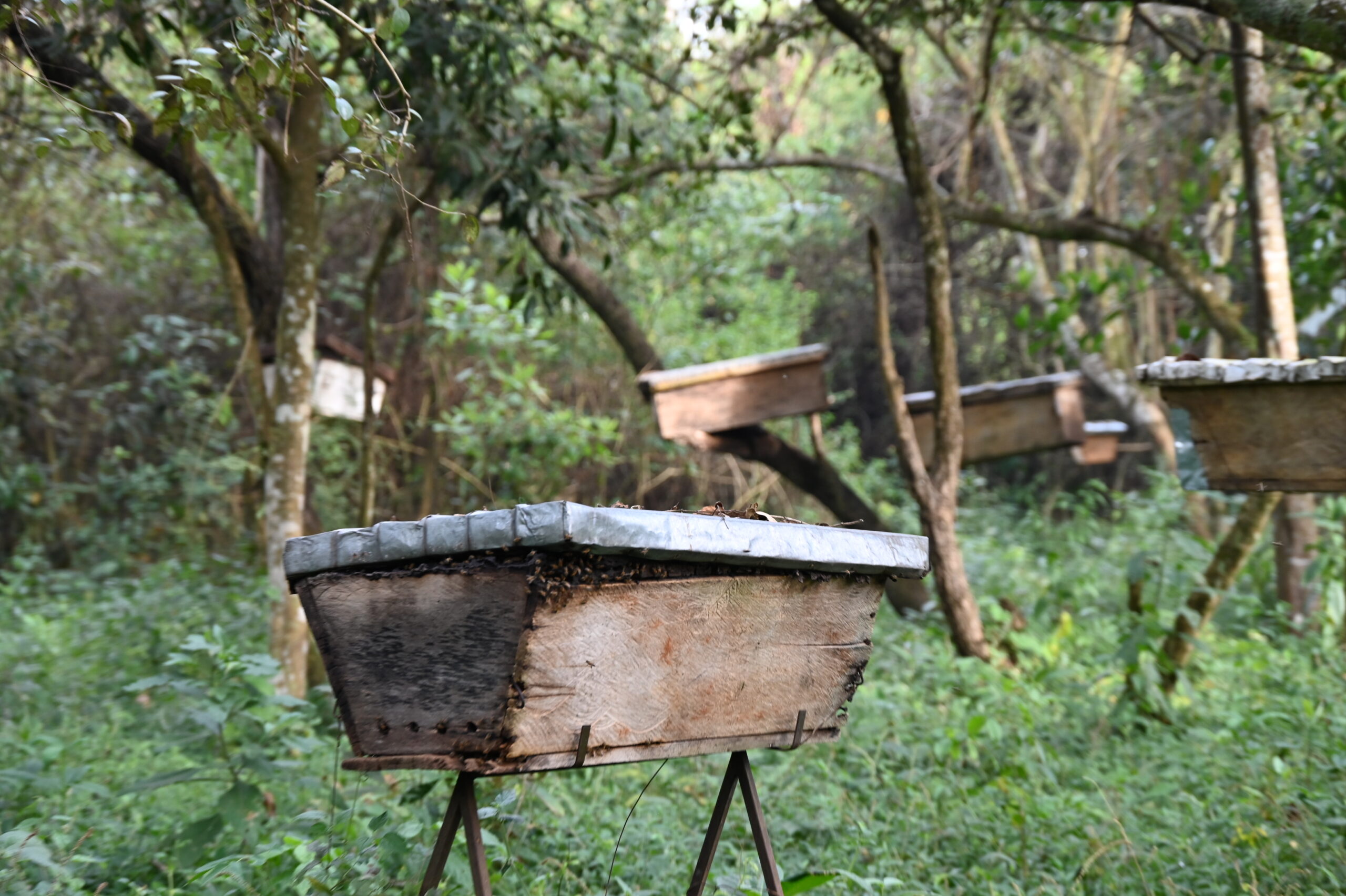
Beehives at Ivan’s apiculture site. He has 85 fully colonized hives from which he harvested 200 kg of honey in the last season.
World Vision Photo/ Tabitha Avola
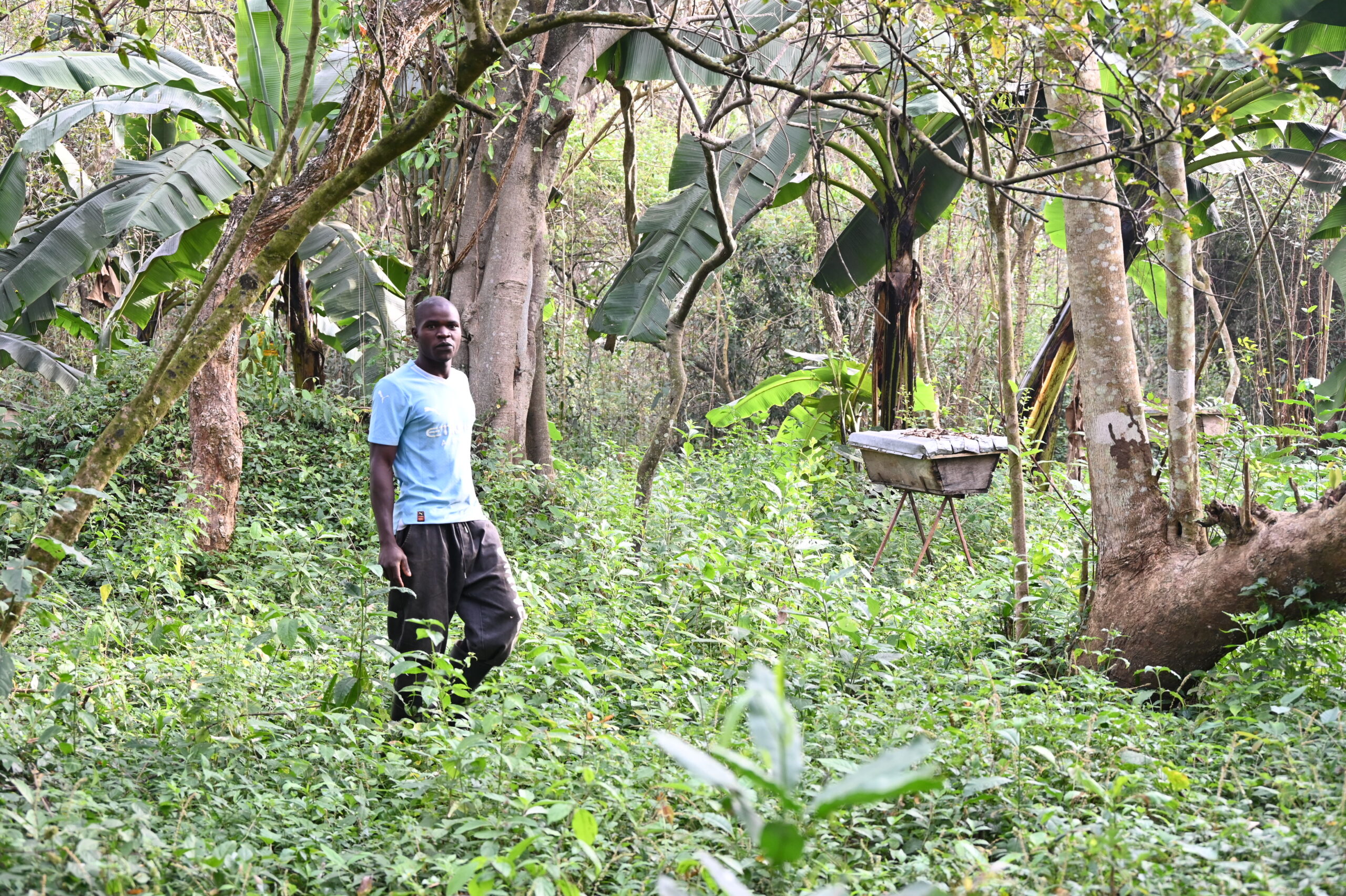
Ivan inspects his hives, an activity he performs daily.
World Vision Photo/ Tabitha Avola
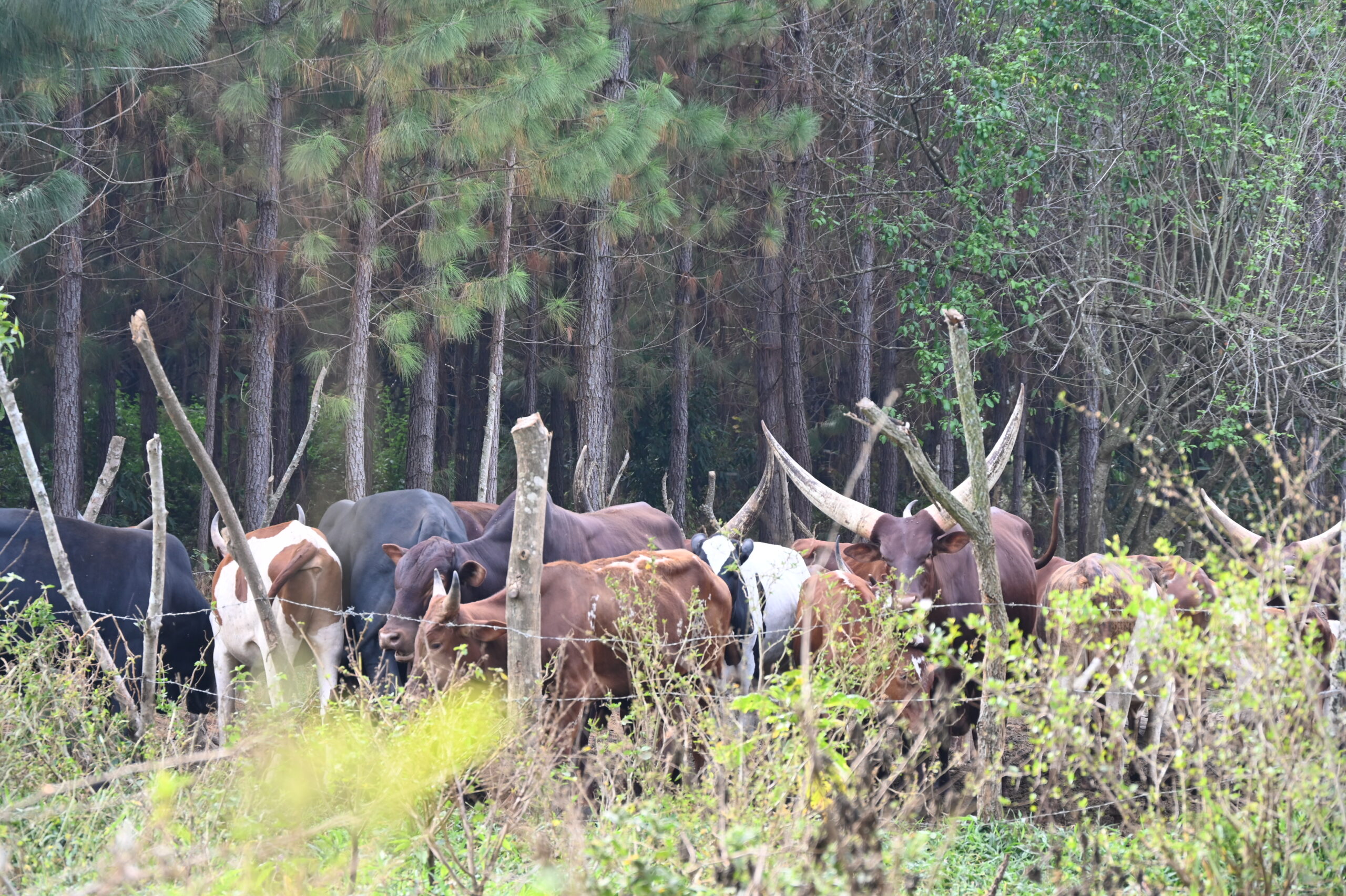
Some of the heads of cattle that Ivan and his brother co-own. He purchased his 12 heads of cattle from proceeds he got after selling honey.
World Vision Photo/ Tabitha Avola
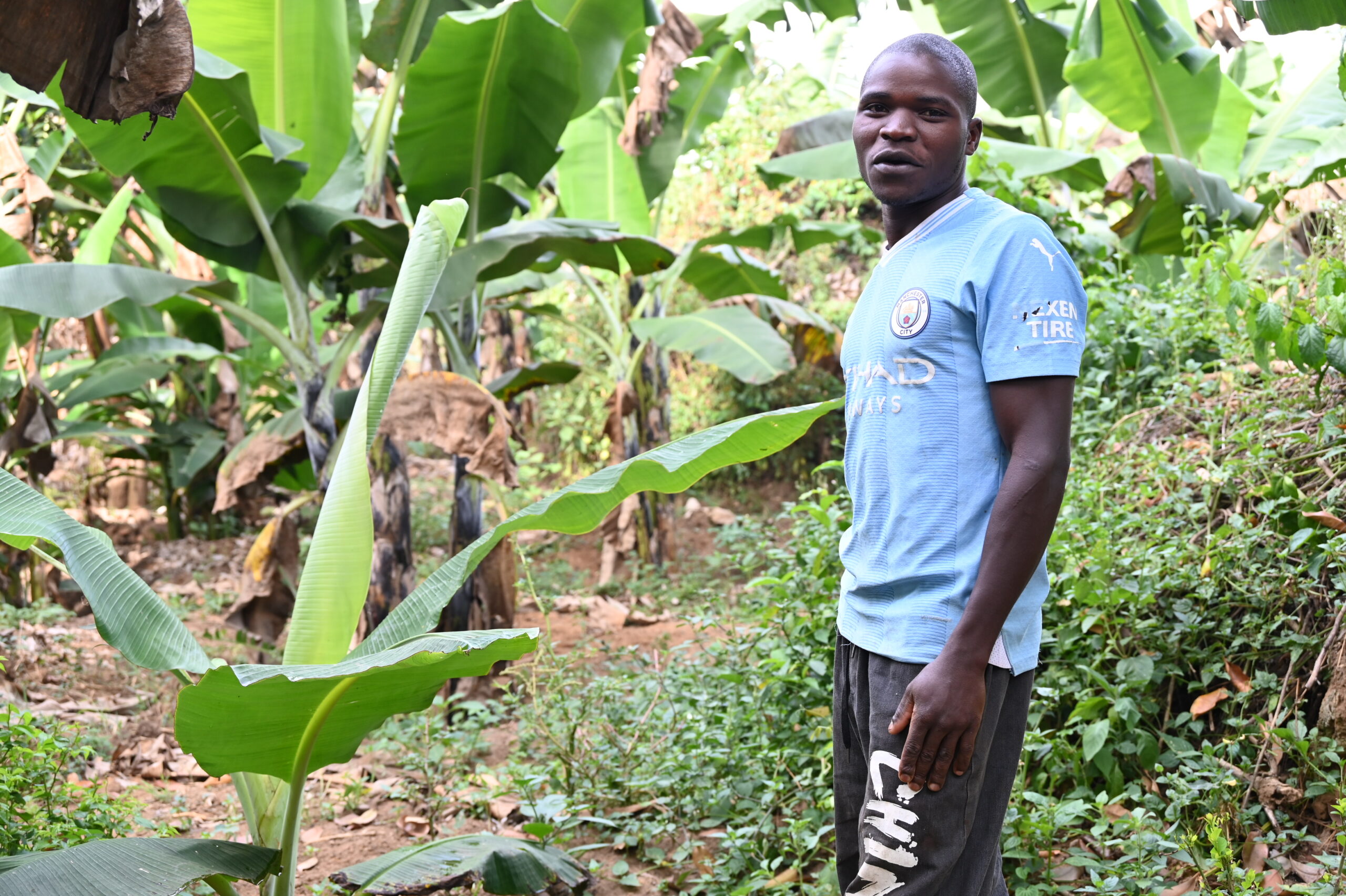
Ivan in his one acre banana garden.
World Vision Photo/ Tabitha Avola
Adding other ventures to supplement the apiary.
As a farmer, one cannot hang onto only one rope for life. From the money I got from the sale of honey, I bought 12 cattle, and along with my brother, together we have 34 heads of cattle. These cattles are herded at one of our FMNR sites where there are trees and fresh grass for the cattle to enjoy and they are doing well.
I also farm bananas on one acre, because I realized that the bees need flowers to flourish, however, the flowers from these trees are not enough, so they will benefit from the flowers of the bananas too.
Farming is a cycle. The bees bring in money, which I use to buy the cattle, the cattle have manure which I use to fertilize the bananas, when the bananas are ready, they are eaten, and you will not find hunger in the home.
Learning about the FMNR model.
I am a chairperson of a group called Waribu Cing Wa Goya Women Farmer’s Group, and we have a store in Abwoch center where we store and sell our produce. That is where I first heard about FMNR. FMNR champions Sunday and Kilama came to the group taught us about FMNR And how to maintain our trees.
I learnt a lot from them and have put into practice. I do not cut down trees, except for those that I absolutely do not need, instead, I prune the trees and maintain them when necessary.
From what I learnt about FMNR, I realized that my bees are going to thrive because they love a quiet and cool space. When my trees grow, the cattle will have a lot of fresh grass under the trees, and the bees will get the flowers from above. That means I am benefiting from the trees from all angles.
Our group is made up of 52 but I believe this number will be increasing this year., because the farmers in the group keep growing every year. We also have a savings group from where people get loans and are able to meet their needs, and it is from this that I have also benefitted. As a group we champion in this community about preserving trees and practicing FMNR on our lands.
At the moment, the biggest challenge that i have is the market, because it is still low. As a farmer, we do our part, but if we do not have the market to sell to then our efforts are in vain. The other challenge is the absence of the stands for the hives, when the hives are on stands, they can be productive for so many years.
I have grown as a farmer from the time I first began to date, and I believe that through sharing our stories and experiences, we are able to uplift and help other people to grow too.