
Call to Look at Drought and Desertification Differently
An article for World Day to Combat Desertification and Drought, 17 June
by Tony Rinaudo, Principal Climate Action Advisor
About the Author
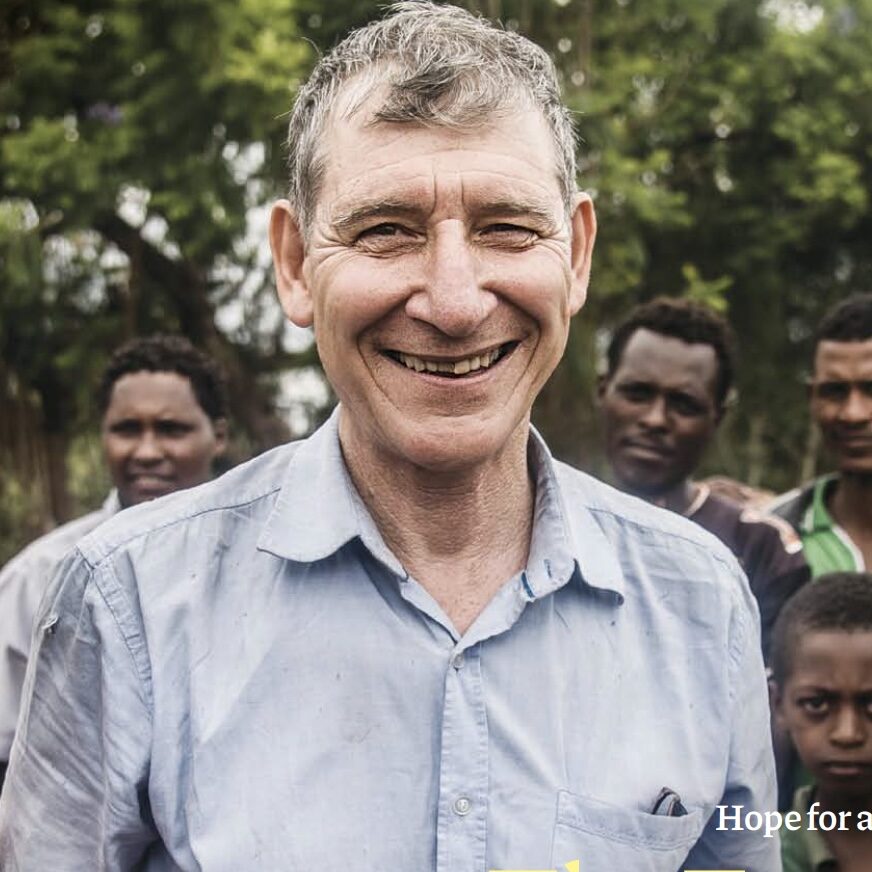
Tony Rinaudo AM, Principal Climate Action Advisor for World Vision Australia, is an internationally acclaimed humanitarian, environmental leader. He is a recipient of the 2018 Right Livelihood Award and 2025 Luxembourg Peace Prize for Outstanding Environmental Peace. Known globally as “The Forest Maker” he pioneered Farmer Managed Natural Regeneration (FMNR), a simple yet revolutionary approach that has become one of the world’s most successful large-scale restoration movements.
After years of experiencing disappointing rainy seasons in Niger Republic, a colleague remarked
“each year, we plant crops and look to the skies expecting rain, only to be bitterly disappointed. Instead, we should expect drought and be pleasantly surprised when it rains”.
This simple mindset change has profound ramifications. When drought is treated not as an occasional, unexpected shock, but as the norm, it changes how we plan, how we manage land, and how we prepare for the future. Instead of reacting to crisis, we begin to anticipate it, moving from passive victims of circumstance to active managers of risk, being empowered to both mitigate and adapt to the impacts of such events.
The stakes are high. Nearly one billion children – almost half the world’s total are at extreme risk from climate and environmental hazards—which includes drought, land degradation and desertification.
We must stop treating drought as a rare disaster and start treating it as a normal condition that should shape how we manage land; and we must back restoration approaches that work in drylands and can be implemented and managed by the communities themselves. We need to design farming systems that anticipate climatic challenges and work with natural processes to build resilience.
Desertification is primarily caused by the combined effects of climate stress, including drought, and unsustainable land use—especially overgrazing, deforestation, and poor farming practices. If drought is beyond our control, often how we use land is not. That is why shifting our mindset matters – it points us towards action. When we take control over what we can influence, we begin to increase our agency over how drought affects land, livelihoods, and resilience.
Not only does the way we view drought and desertification need to change. In some cases, how we tackle these issues needs to change. Tree planting remains a popular response to desertification, yet results in harsh environments are often poor. A recent global study[1] of restoration projects found costs ranging from $185 to over $3,000 per hectare, with a median of around $1,700 per hectare, underscoring how expensive conventional approaches can be at scale. Such costs severely limit scale. Particularly in harsher environments, tree planting is simply not working, yet year after year, large amounts of money and labour are invested into this activity. If drought is normal, restoration methods must be suited to dryland realities—low-cost, resilient, and locally manageable.
Tree planting definitely has its place, but costly restoration models that ignore how dryland ecosystems and farming systems actually function would do well to consider including alternate viable options, particularly in harsher environments.
This tendency to persist with failing methods is not new. In The PBS 2012 ‘The Dust Bowl’ documentary, a farmer recounts his experience:
“You didn’t try something different; you just tried it harder, the same thing that didn’t work”.
The lesson is sobering. When old methods fail, we often respond by repeating them with greater effort rather than changing course. That pattern still shapes many restoration programs today. Even though often ineffective and uneconomic, reforestation through conventional tree planting remains the mainstay to address desertification. We don’t try something different. We just try the same thing harder, the same thing that didn’t work. This is neither economic nor strategic.
Yet proven alternatives already exist. Experiences of low cost, rapid and sustainable approaches such as Farmer Managed Natural Regeneration (FMNR) are well documented and researched. While initial FMNR project support can cost as little as $50 per hectare, the practice quickly becomes self-sustaining, with farmers regenerating and managing trees through their own voluntary labour and without ongoing project costs. This is a critical distinction – FMNR adoption is not constrained by, or dependent on, continued external investment.
FMNR works because it builds on existing root systems and seed banks, is adapted to local ecological conditions, improves soil moisture, organic matter, and resilience, and is more easily owned by farmers because it does not depend on costly external inputs. Where conventional tree planting achieved limited results at high cost, FMNR in Niger spread at scale through farmer-led action, regenerating 200 million trees across five million hectares over two decades. These changes in turn led to diverse impacts including greater food security, increased incomes, healthier children and higher school attendance. This was a farmer led movement, achieved largely through their voluntary labour, and the movement continues to this day.
Space does not permit a full technical explanation of FMNR or on how trees counter drought and desertification but in layman’s terms, trees create more favourable climatic and soil conditions for life to thrive. See Fig.1.
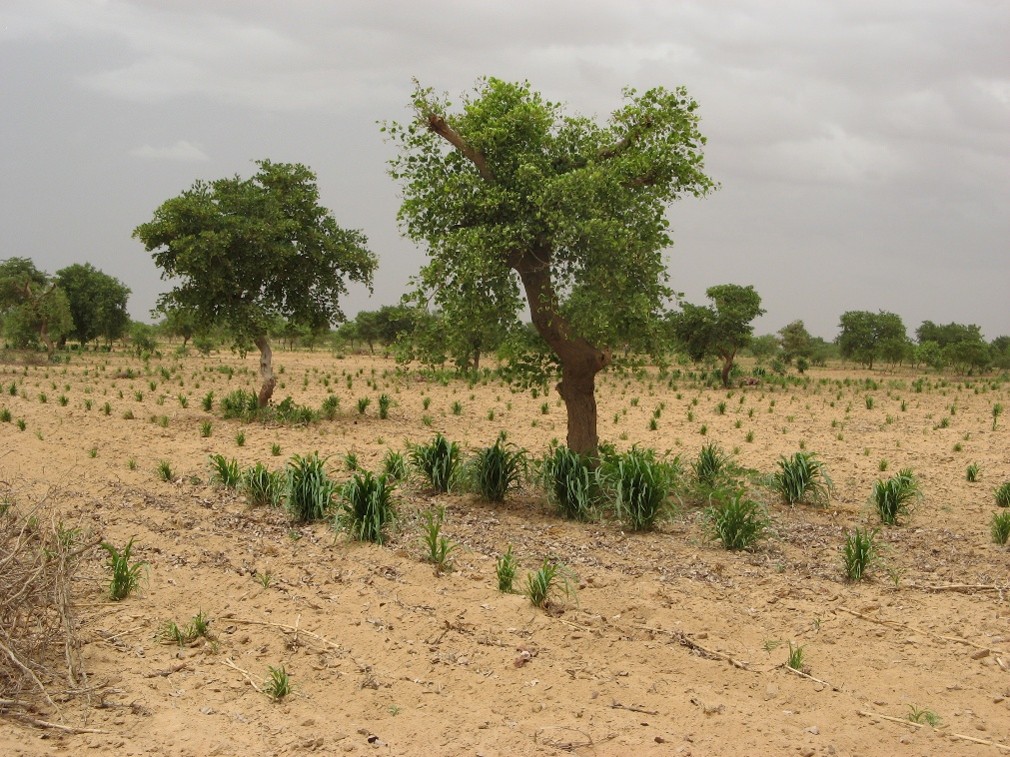
FMNR appeals to local land users because it helps meet felt needs including food, water, fodder and fuel relatively quickly at low cost. It also strengthens resilience to climatic shocks, reducing the risks inherent in farming.
This matters globally, especially as the world faces yet another El Nino. In southern Africa, past El Nino induced droughts have cut maize yields by up to 50% and left over 40 million people affected, while parts of eastern Ethiopia have seen crop losses of 50–90%. We now have a critical opportunity – not simply to endure the next drought, but to build resilient, thriving communities that are no longer defined by it.
If we continue to treat drought as an exception and rely on restoration methods that fail in harsh environments, we will keep spending scarce resources without changing outcomes. But drought and desertification need not define that future. When we work with natural processes and support approaches that communities can sustain, we restore not only land, but resilience and hope.
For the sake of the nearly one billion children at extreme risk from climate and environmental hazards, we must act now – scaling practical, proven solutions like FMNR that can restore landscapes and livelihoods in even the most challenging environments.
Now is the time to support, invest in, and advocate for these approaches.
Please join us to fight for a better future for the world’s children.
[1] Land Degradation & Development | Environmental & Soil Science Journal | Wiley Online Journal